Tyneside Flats and Terraces: Why Newcastle Rooflines Need Regular Cleaning
If you live in one of Newcastle's Tyneside flats or a Heaton terrace, your roof works harder than you think. It sits through North Sea winds, damp autumns, and the odd hard frost, and most of the year you never give it a second look. That's normal. Roofs are the last thing on anyone's mind until moss starts dropping into the gutter or a dark green stain creeps across the slates.
So let's talk about why the rooflines on Newcastle's older streets pick up dirt and growth faster than newer builds, and what it costs you to leave them.
The quick answer: Most of Newcastle's Victorian and Edwardian roofs are Welsh slate, often shared across paired Tyneside flats, and they hold damp on their shaded north-facing slopes. That mix lets moss and algae settle in quickly, so a clean every few years protects the slate and keeps water running off the roof the way it should.
1. The roofs sitting over Newcastle's streets
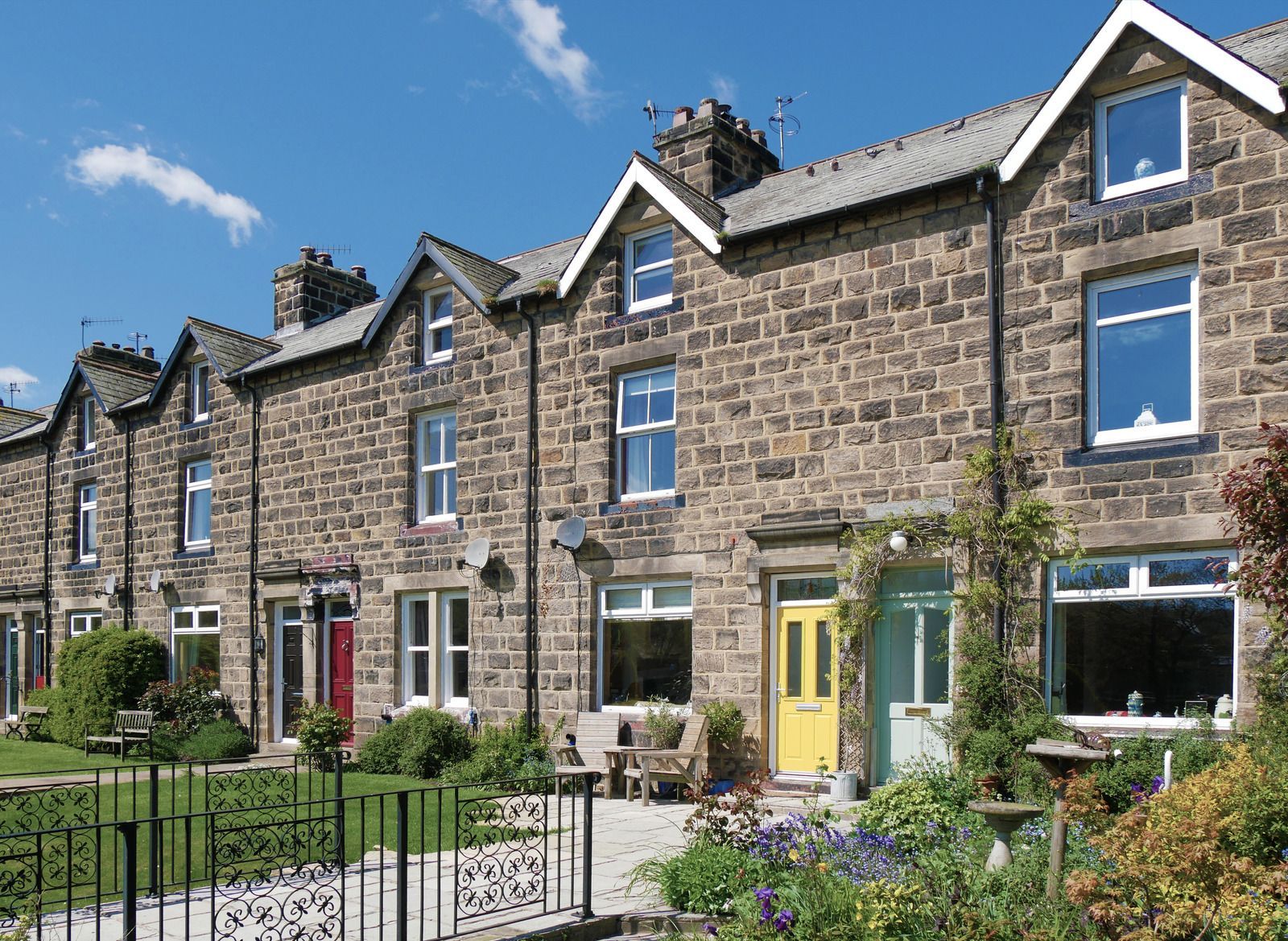
Walk down almost any street in Heaton, Sandyford or Gosforth and you're looking at roofs laid more than a century ago. Welsh slate was the standard covering for the terraces and Tyneside flats that went up between the 1880s and the First World War. It's a good material. Thin, hard-wearing, and still doing its job after 120 years on plenty of homes.
But old slate has a rougher surface than people expect, and it sits at a fairly shallow pitch on a lot of these houses. Water drains slower off a shallow roof. Add the shade from tall neighbouring buildings and mature trees, and you get slates that stay wet long after the rain stops.
That damp is what moss and algae live on. The slate itself isn't the problem. The conditions on top of it are.
2. Why paired Tyneside flats make cleaning trickier
The Tyneside flat is Newcastle's own invention. One flat downstairs, one upstairs, two front doors side by side, built in their thousands for working families across the late Victorian city. Handsome, practical, and still hugely popular today.
Here's the catch. The roof over a pair of Tyneside flats is usually one continuous structure covering two separate homes. Neither owner really thinks of the roof as fully theirs, so it tends to get neglected by both. Moss builds up on a slope that belongs to nobody in particular until a slipped slate or a leak forces the issue.
If you own one half of a Tyneside flat, it pays to talk to your neighbour about the roof as a shared thing. A clean and a check across the whole span is cheaper and simpler than sorting out water damage after the fact.
3. What moss actually does up there
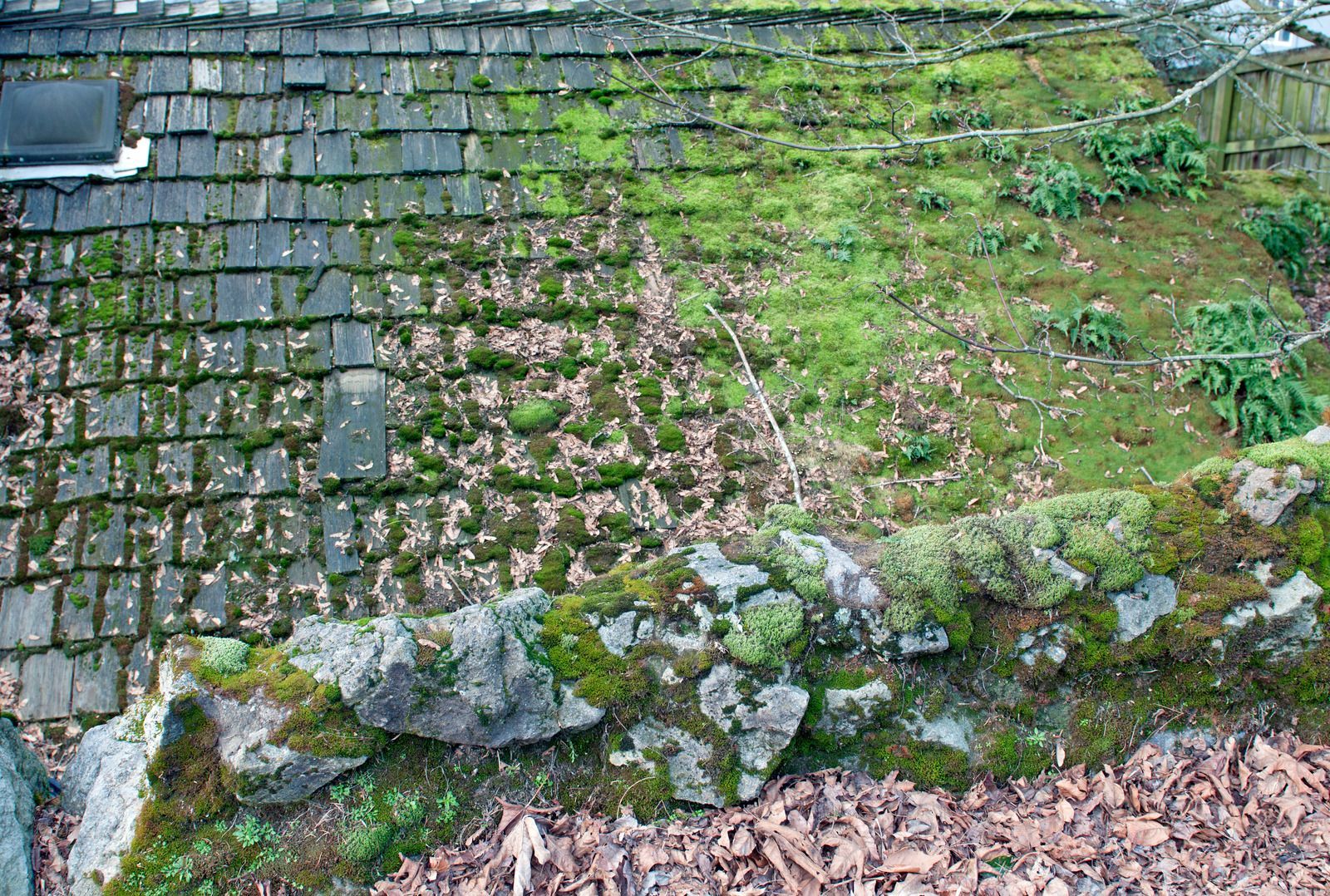
Moss looks soft and harmless from the pavement. Up close it behaves like a sponge bolted to your roof. It soaks up rain and holds it against the slate for days, which keeps the surface damp and speeds up the wear on the slate and the mortar around the ridge.
Worse, clumps break loose in wind and heavy rain and wash straight into the gutter. Once that happens the water has nowhere to go. It backs up, spills over the edge, and runs down the wall behind the downpipe. On a north-facing Newcastle gable that never really dries out, that's how damp patches start showing up on bedroom walls.
And when a frost hits, any water trapped under moss or in a hairline gap freezes and expands. Freeze-thaw is what turns a small flaw in a slate into a cracked one.
4. The valley gutters nobody checks
A lot of Newcastle terraces have valley gutters, the metal-lined channels where two roof slopes meet. They carry a surprising amount of water, and they're exactly where moss, leaves and grit collect first.
You can't see a blocked valley from the street, and you rarely see it from a bedroom window either. The first sign is usually a damp ceiling in the middle of the house rather than at the edge. By then the water has been sitting there a while.
Clearing valleys and gutters is part of any proper roof clean, not an afterthought. It's often the part that saves you the most money.
5. How often these roofs really need attention
There's no single rule, because it depends on shade, trees and which way your roof faces. A south-facing slope in full sun might go years looking fine. A shaded north slope backing onto a lane can green over in a couple of winters.
As a rough guide, most older Newcastle roofs benefit from a proper look every three to five years. If yours sits under trees or faces north, lean toward the shorter end. The point isn't to clean constantly. It's to catch growth before it thickens into a mat that lifts slates and blocks water.
Watch for these signs that your roof is asking for attention:
- Green or black staining spreading across the slates, heaviest on the shaded side.
- Moss clumps in the gutter or on the ground after windy weather.
- Water spilling over the gutter edge during heavy rain instead of running down the pipe.
- Damp patches appearing on upstairs ceilings or the tops of walls.
- Slipped or cracked slates visible from the street or the garden.
6. What a proper clean looks like
Good roof cleaning on old slate is gentle work, not a blast with a jet washer. High-pressure water strips the surface off aged slate and forces water under the laps, and on a Newcastle terrace that's asking for trouble. Soft washing does the job instead: low-pressure water with a treatment that kills the moss and algae at the root so it doesn't grow straight back.
The moss gets cleared by hand and brush, the gutters and valleys are flushed out, and the roof is left to weather clean over the following weeks. Done right, you keep the slate you already have rather than paying to replace it.
That's the whole idea. A tired-looking roof isn't always a failing roof. Often it just needs the growth taken off and the water paths cleared.
Frequently Asked Questions
Will cleaning damage my old slate?
Not if it's done with low pressure. The danger comes from jet washing, which erodes aged slate. Soft washing lifts the moss and algae without stripping the surface.
My Tyneside flat shares a roof with next door. Whose job is the cleaning?
Usually it's shared, and the practical answer is to sort it together. Cleaning the whole span at once costs less per household and avoids arguments later when a leak appears.
Does moss really come back if you just scrape it off?
Yes. Scraping removes what you can see but leaves the spores behind. A biocide treatment is what slows the regrowth, which is why a treatment matters more than brute force.
How long does a roof clean take?
Most terraced roofs are a day's work, sometimes less. Bigger or heavily overgrown roofs can run longer, and any gutter or valley clearing is usually built into the same visit.
Is autumn a bad time to have it done?
Not at all. Clearing gutters and moss before winter is one of the smartest times to do it, because it means water can drain freely through the wet months and the frost.
Roof looking tired across Newcastle or Tyne and Wear?
Ben's Roof Cleaning works on slate terraces and Tyneside flats right across Newcastle and the wider region, with over 15 years of experience. Get in touch or call 0191 323 1965
for a free, no-obligation quote.
Old roofs last longer when you look after them
Newcastle's slate roofs were built to last, and most of them still can. What shortens their life is neglect: moss left to thicken, gutters left to block, water left to sit where it shouldn't. A clean every few years is a small thing that keeps a hundred-year-old roof doing its job for another generation. If yours is greening over, it's worth dealing with before winter rather than after.